Fabric guide · Published
Velvet vs velour: how to tell them apart and care for each
In this article

How velvet, velour and corduroy differ
Velvet vs velour is hard to settle by touch alone: both feel soft and have a pile, a surface of raised fibres.
How they are made usually tells them apart: velvet is woven, while velour is often knitted, though it can be woven too.
Corduroy has lengthwise ribs.
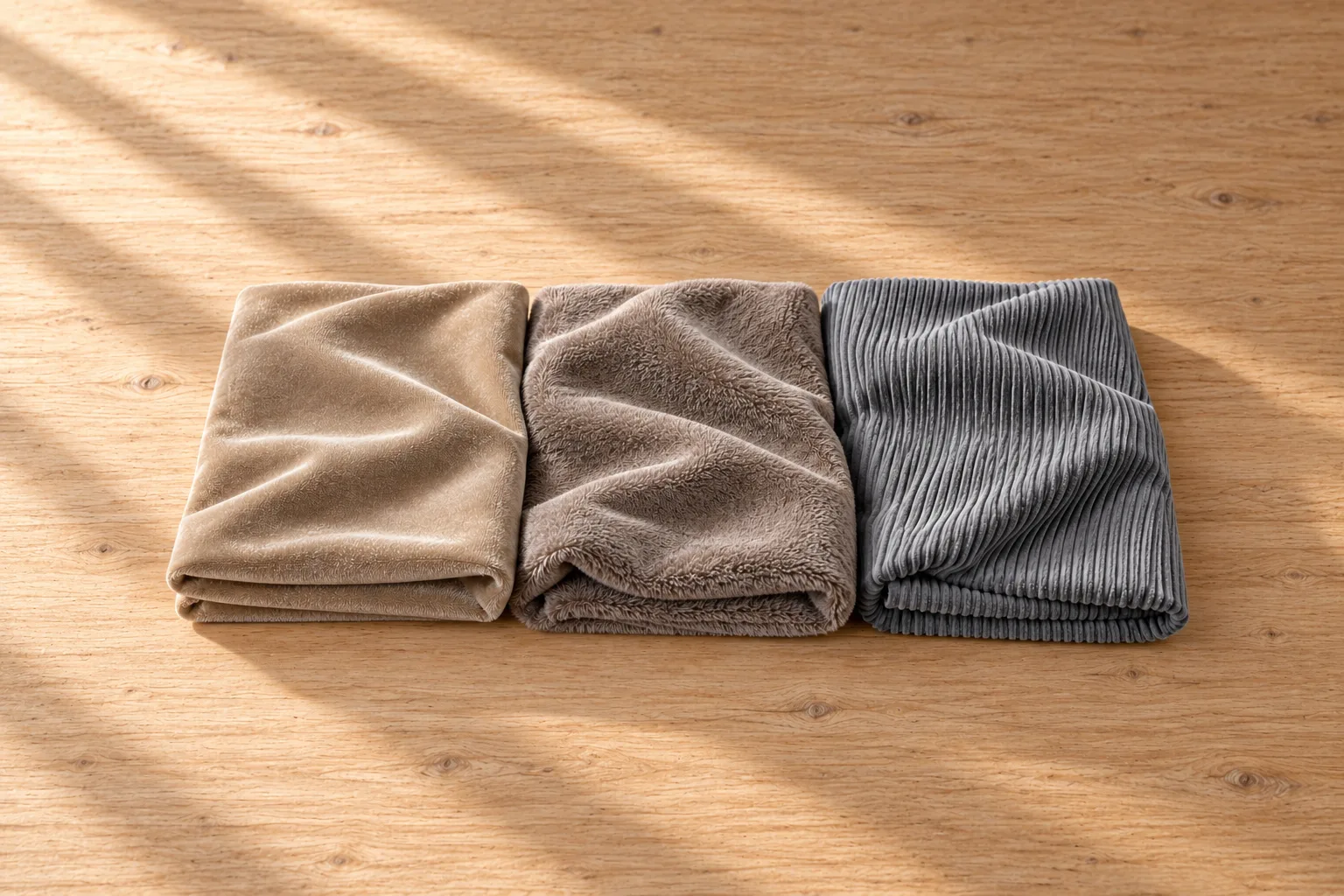
The differences at a glance
| Velvet | Velour | Corduroy | |
|---|---|---|---|
| Made as | woven | often knitted, sometimes woven | woven |
| Pile | thick, close | soft, velvet-like | short, in ribs |
| Ribs | no | no | yes, lengthways |
| Stretch | — | knitted velour stretches | — |
| Fibres | silk, cotton, synthetics | cotton, wool, rayon, polyester, blends | cotton, wool or other fibres |
| Where you see it | clothes, curtains | outerwear, upholstery | trousers, jackets, upholstery |
Where velvet gets its pile
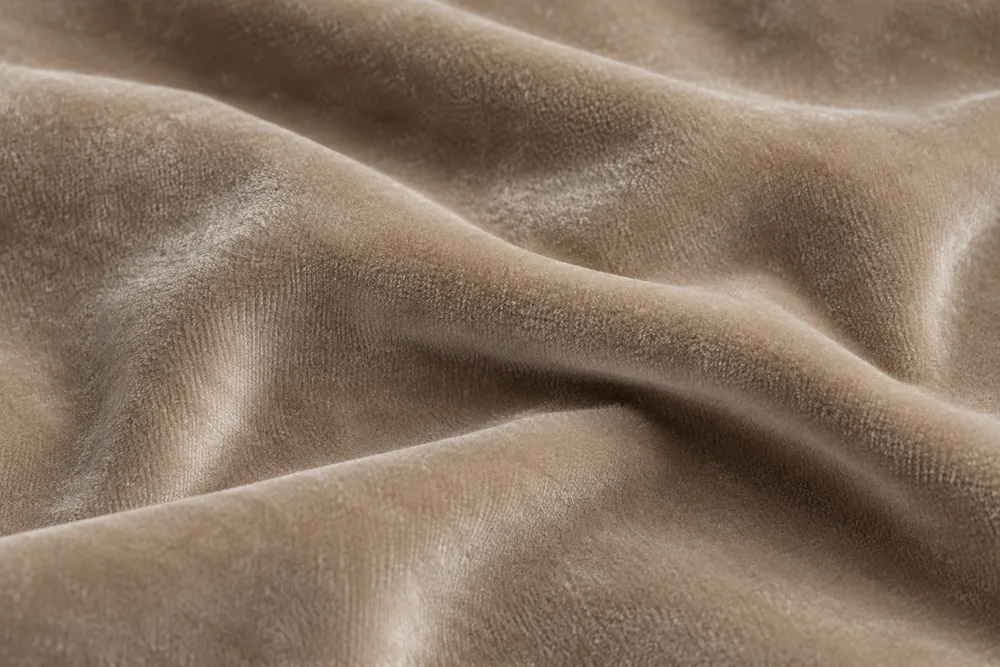
Velvet is a woven fabric whose pile comes from the warp threads, the threads that run along the length of the cloth.
Two layers are usually woven together with extra threads.
The layers are then cut apart, leaving a dense surface with a soft sheen.
What velour can mean
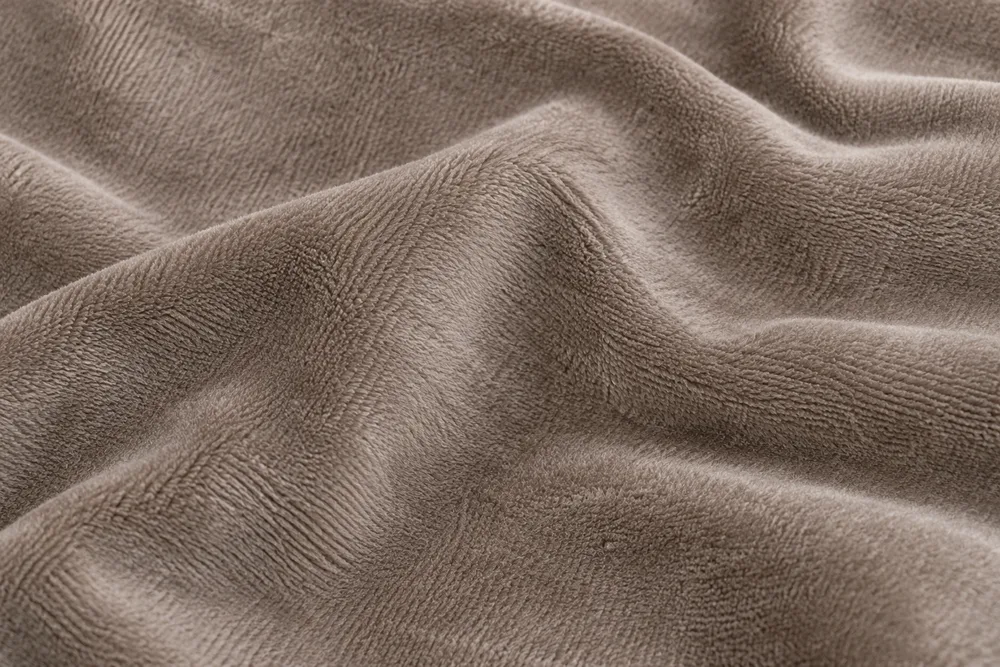
The word velour covers several fabrics with a velvet-like finish.
It can contain natural or synthetic fibres; the label tells you which you have.
How to recognise corduroy
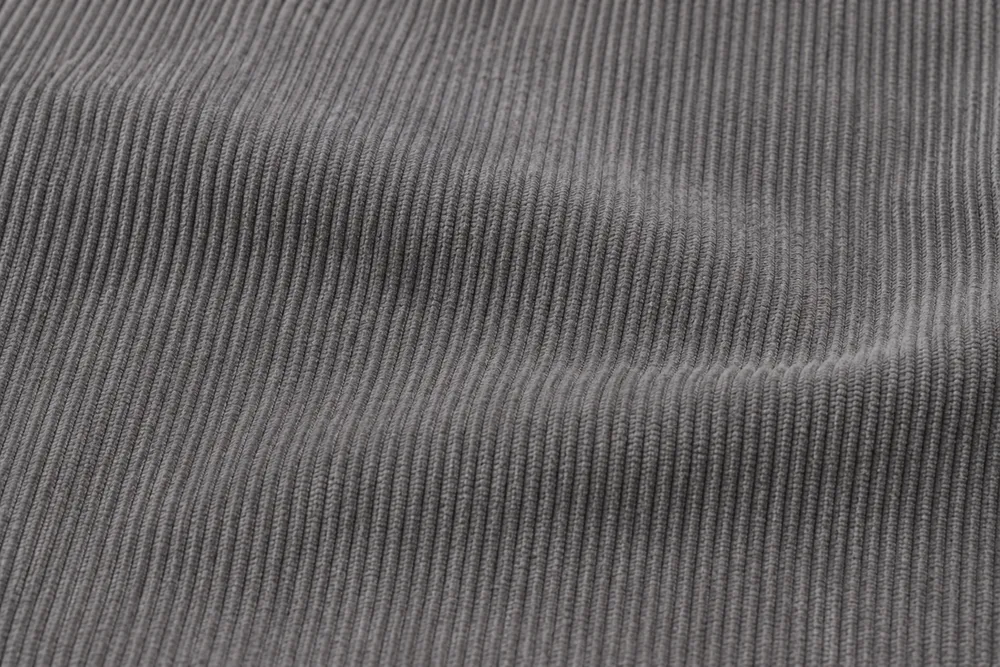
Corduroy is a woven pile fabric with raised lengthwise ribs.
The ribs distinguish it from the smoother surfaces of velvet and velour.
On a Polish label, it may be called _sztruks_.
Start with the care label
The item’s care label decides how it can be washed, dried and ironed.
The guidance below is for each cloth in general; where the label says otherwise, follow the label.
- Number in the tub: maximum water temperature.
- Bar below the tub: a milder cycle.
- Hand in the tub: hand wash.
- Crossed-out tub: do not wash.
- Square with a circle: tumble drying allowed.
- Crossed-out square with a circle: do not tumble dry.
- Circle: professional cleaning.
- Iron: check the label for ironing conditions.
How to wash velour
- Soaking: do not soak pile fabrics.
- Washing: use cool water and a delicate cycle.
- Spin: turn it off or set it to the minimum.
- Handling: do not rub, wring or stretch velour.
- Drying: do not tumble dry; lay it flat on an absorbent towel.
- Ironing: iron from the wrong side through a cloth, with a towel underneath, or steam it.
- Pile: lift crushed fibres with a soft brush.
How to wash velvet
- Dry cleaning: if the label says dry clean only, take the item to a professional.
- Washing: otherwise, use a hand-wash or gentle cycle and a gentle detergent.
- Drying: blot excess water with a towel; hang clothes at full length.
- Ironing: never iron the face, the right side of the cloth, as heat and pressure crush the pile. Iron the reverse at low heat, or steam creases from the back.
- Pile: brush it with a soft brush.
How to wash corduroy
- Preparation: turn the item inside out.
- Washing: use cool water; hot water can shrink cotton corduroy.
- Tumble drying: avoid it, as corduroy can shrink.
- Air drying: keep the item away from heaters and direct sun.
- Ironing: work on the wrong side or through a damp cloth to avoid flattening the ribs.
Which to pick, and the velour we sew
If you want a fabric that stretches, pick knitted velour.
If you want a dense pile with a sheen for clothes or curtains, pick velvet.
For trousers and jackets with ribs, pick corduroy.
We sew only velour, in two kinds:
- Makeup bag, mini makeup pouch and laptop case: minky, a soft polyester plush velour with a longer pile.
- Travel bag: harder-wearing upholstery velour with an anti-claw finish.
In our experience, neither of them pills (forms little balls of fibre).
Our finished pieces need gentler care than the cloth guidance above:
- Cleaning: spot clean only.
- Steaming: use a thin cotton cloth without pressing.
- Drying: dry naturally away from sun, radiators and tumble dryers.
Velour is available for:
- the makeup bag;
- the mini makeup pouch;
- the laptop case;
- the travel bag.